South Korea Cuts US Joint War Games After Trump’s North Korea Pivot
Introduction
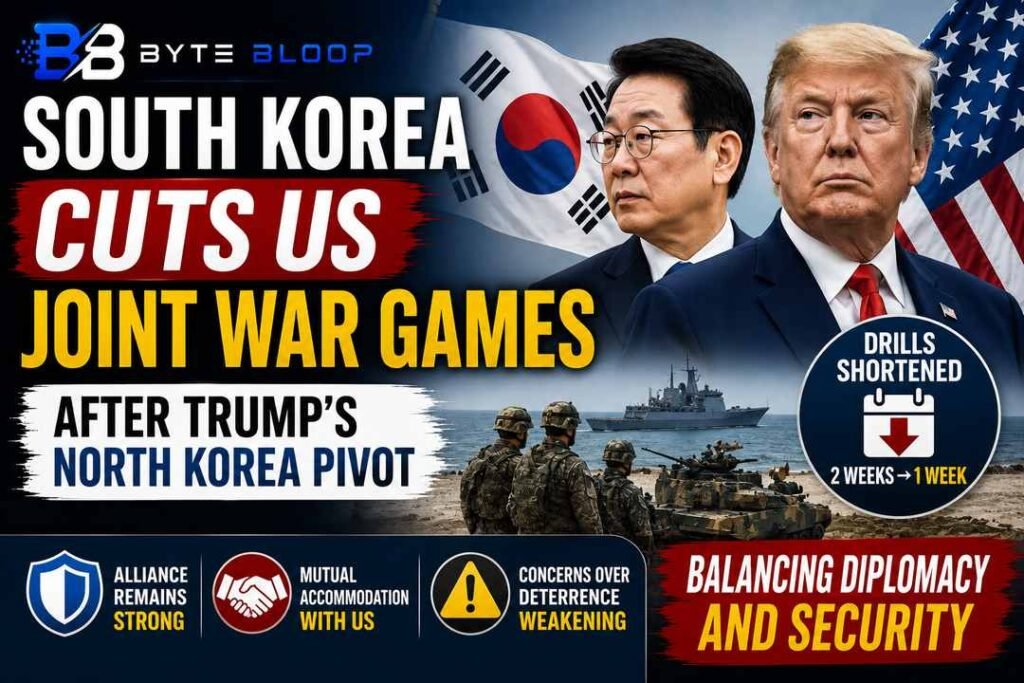
Seoul announced on Tuesday that it will truncate the duration of its annual combined field training exercise with the United States, responding to a request from Washington to scale back the drills. The decision arrives just weeks after former President Donald Trump publicly declared a “very good” relationship with North Korean leader Kim Jong Un and signaled an intention to curb joint military activities that have long been a cornerstone of the peninsula’s deterrence strategy.
Officials from both capitals described the move as a “mutual accommodation” aimed at easing regional tensions while preserving the core capabilities that underpin the U.S.–South Korea alliance. Critics, however, warn that the reduction could embolden Pyongyang and undermine decades of security cooperation.
Background & Historical Context
Since the Korean War armistice in 1953, the United States and South Korea have conducted annual joint exercises—most notably the “Foal Eagle” and “Key Resolve” drills—to rehearse defensive operations against a potential North Korean invasion. These exercises have grown in scale and complexity, often involving thousands of troops, advanced weaponry, and live‑fire simulations.
In 2018, after a series of high‑profile summits between Trump, South Korean President Moon Jae‑in, and Kim Jong Un, the two Koreas announced a historic de‑escalation, prompting a temporary pause in some joint drills. Yet, by 2020, the exercises resumed at full intensity, reflecting renewed concerns over North Korea’s missile program and the perceived need to demonstrate allied resolve.
Key Details & Impact Analysis
The latest adjustment trims the joint field training from a planned two‑week operation to a single week, with a reduced footprint of ground forces and fewer live‑fire components. While the United States has not disclosed specific operational changes, Pentagon spokesperson John Kirby confirmed that “the core objectives of readiness and interoperability remain intact.” South Korean Defense Minister Shin Won‑sik added that the shortened schedule will still allow “essential command‑and‑control rehearsals” while respecting the request from the United States.
Analysts suggest the move carries both diplomatic and strategic implications. On the diplomatic front, it signals a willingness by both allies to accommodate Trump’s overtures toward North Korea, potentially opening a narrow window for renewed dialogue. Strategically, however, the reduction may limit the allies’ ability to test integrated responses to emerging threats, such as hypersonic weapons and cyber attacks, which require extensive joint coordination. Regional observers in Japan and Australia have expressed concern that a perceived weakening of the U.S.–South Korea deterrent could shift the security calculus in East Asia.
Frequently Asked Questions (FAQs)
Why did the United States request a shorter exercise?
Washington cited a desire to “reduce unnecessary friction” with North Korea while maintaining essential readiness. The request aligns with President Trump’s public statements about improving ties with Pyongyang and reflects a broader diplomatic strategy aimed at creating conditions for a possible summit.
Will the reduced drills affect the alliance’s combat readiness?
Both militaries assert that the core training objectives—command integration, joint logistics, and rapid response—will still be achieved within the condensed timeframe. Nonetheless, some senior officers warn that fewer live‑fire scenarios could limit hands‑on experience with advanced weapon systems.
How might North Korea respond to the scaled‑back exercises?
Pyongyang has historically used U.S.–South Korean drills as a pretext for missile launches and propaganda. Early statements from the Korean Central News Agency suggest that North Korea will monitor the changes closely but has not indicated any immediate retaliation. Analysts caution that any perceived weakening could be exploited by the regime to justify further provocations.
Conclusion
The decision to shorten the U.S.–South Korea joint war games underscores the delicate balance between diplomatic overtures toward North Korea and the imperative to maintain a credible deterrent. While the move may ease short‑term tensions, it also raises questions about the long‑term resilience of the alliance’s readiness posture. As regional actors watch closely, the coming months will reveal whether this accommodation fosters genuine dialogue or merely provides a temporary pause in a broader strategic contest.
Source: BBC News