Ashok Gehlot’s 50% Gen‑Z Promise Fuels BJP’s Rahul‑Sonia Retort
Introduction
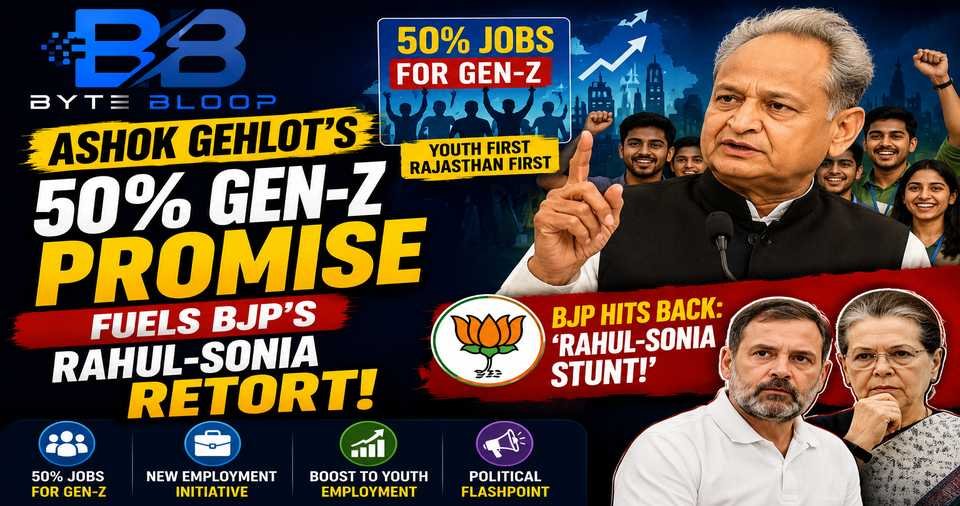
Rajasthan’s ruling Congress chief minister, Ashok Gehlot, unveiled an ambitious employment drive that promises to reserve 50 % of all newly created jobs for the state’s Gen‑Z population. Announced during a high‑profile rally in Jaipur, the scheme is positioned as a direct answer to the soaring youth unemployment rate, which the National Sample Survey Office (NSSO) estimates at over 20 % for the 18‑35 age bracket.
The proclamation has instantly become a flashpoint in national politics. The Bharatiya Janata Party (BJP) seized the moment, branding Gehlot’s initiative as a “Rahul‑Sonia” stunt—an insinuation that the move is merely a political ploy designed to mimic the youth‑centric rhetoric of senior Congress leaders Rahul Gandhi and Sonia Gandhi. As the election calendar tightens, the debate over youth jobs is set to dominate campaign narratives across India.
Background & Historical Context
India’s demographic dividend has long been a double‑edged sword. While the country enjoys one of the world’s youngest workforces, the gap between job creation and the number of job‑seekers continues to widen. Previous state‑level schemes, such as Karnataka’s “Youth Employment Initiative” and Maharashtra’s “Skill Development Mission,” have produced mixed results, often hampered by bureaucratic delays and limited private‑sector participation.
Gehlot’s 50 % pledge builds on his administration’s earlier efforts to attract investment through the “Rajasthan Investment Summit.” In 2022, the state secured over $5 billion in commitments, yet critics argue that the benefits have not trickled down to the younger demographic. By earmarking half of future job openings for Gen‑Z, Gehlot aims to convert investment inflows into tangible employment outcomes, a strategy that could reshape Rajasthan’s political calculus ahead of the 2024 Lok Sabha polls.
Key Details & Impact Analysis
The scheme, officially titled “Youth Employment for Rajasthan (YER),” will apply to both public‑sector vacancies and private‑sector positions that receive state subsidies or tax incentives. Eligible candidates must be between 18 and 35 years old, possess at least a secondary school certificate, and undergo a skill‑validation test administered by the Rajasthan Skill Development Authority. The government has allocated ₹3,200 crore (approximately $380 million) for training programs, digital job portals, and employer outreach.
Analysts predict a multi‑layered impact. In the short term, the initiative could boost enrollment in vocational courses by an estimated 30 %, as young aspirants seek the certification required for YER eligibility. Medium‑term effects may include a 1.5‑2 % rise in the state’s employment rate, provided that private firms respond positively to the tax incentives. However, skeptics warn of potential pitfalls: the risk of token hires that satisfy quota requirements without offering career progression, and the administrative burden of monitoring compliance across thousands of enterprises.
Frequently Asked Questions (FAQs)
What criteria must a job meet to fall under the 50 % Gen‑Z reservation?
Any new position created after the scheme’s launch that is either directly funded by the Rajasthan government or receives a state‑provided tax rebate or subsidy will be subject to the reservation rule. This includes roles in manufacturing, services, renewable energy, and IT‑enabled sectors.
How will the government ensure that the reserved jobs are genuine and not merely symbolic?
The Rajasthan Skill Development Authority will conduct quarterly audits, cross‑checking employer reports with payroll data submitted to the state’s labor department. Companies found violating the quota may face penalties ranging from fines to revocation of tax benefits.
Will the scheme affect existing employees or only new hires?
The reservation applies solely to newly created positions. Existing staff will not be displaced, and the policy does not mandate any changes to current employment contracts.
Conclusion
Ashok Gehlot’s bold promise to allocate half of all new jobs to Gen‑Z has thrust youth employment into the national spotlight, prompting a swift rebuttal from the BJP that frames the move as a political gimmick. Whether the YER scheme translates into real, sustainable jobs will depend on effective implementation, private‑sector buy‑in, and rigorous oversight. As India’s electorate becomes increasingly youthful, the outcome of this policy battle could shape not only Rajasthan’s political fortunes but also set a precedent for how Indian states address the pressing challenge of youth unemployment.
Source: Times Now