Hybrid Learning: Explained
Introduction
What Is Hybrid Learning?
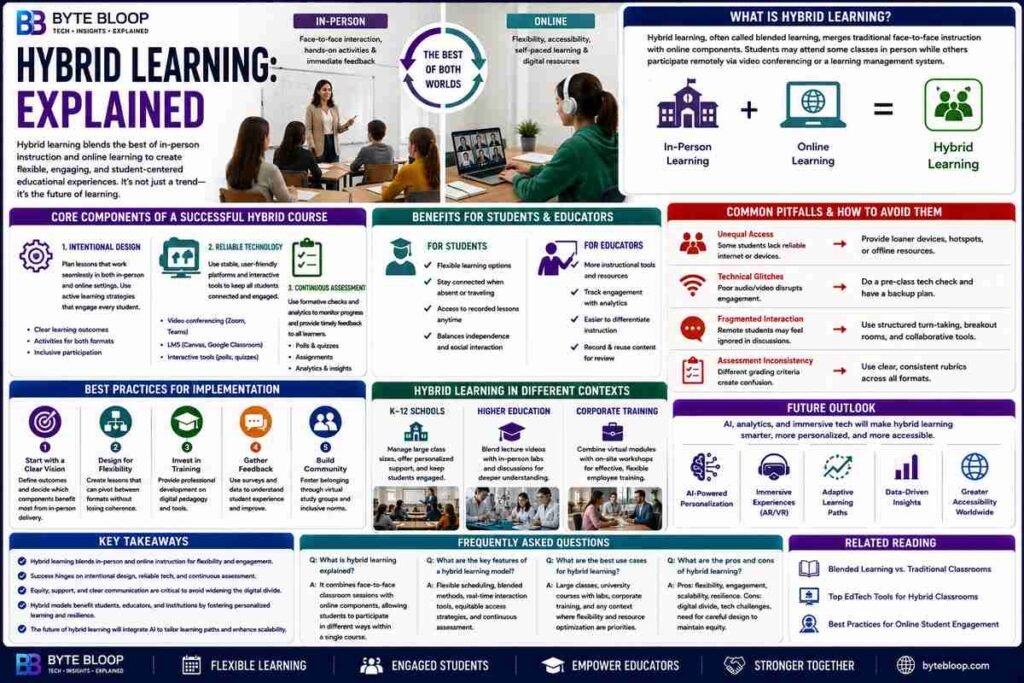
Hybrid learning, often called blended learning, merges traditional face‑to‑face instruction with online components. In a typical hybrid model, students attend some classes in person while others join remotely via video conferencing or a learning management system. The goal is to create a flexible environment that maximizes engagement, accommodates diverse learning styles, and leverages technology to enhance the classroom experience.
During the pandemic, many schools adopted hybrid approaches to maintain continuity. Post‑pandemic research shows that hybrid models are now a permanent fixture in many curricula, offering a balanced mix of interaction, autonomy, and scalability. Hybrid learning is not just a temporary fix; it represents a strategic shift toward more resilient and student‑centered education.
Core Components of a Successful Hybrid Course
Effective hybrid instruction relies on three pillars: intentional design, reliable technology, and continuous assessment. According to a comprehensive guide from Feedback Fruits, teachers must plan lessons that can be delivered both in‑person and online without sacrificing depth. This means choosing activities that work in both settings, such as small‑group discussions that can be moderated via breakout rooms.
Technology must be robust and user‑friendly. Platforms like Zoom, Microsoft Teams, and learning management systems provide the backbone, but they should be integrated with interactive tools—polls, quizzes, and real‑time collaboration software—to keep remote students engaged.
Assessment strategies should be flexible. Formative checks, such as quick polls or short quizzes, can be administered to both in‑class and online students simultaneously, ensuring that every learner receives timely feedback.
Benefits for Students and Educators
For students, hybrid learning offers flexibility to balance school with personal commitments. Remote participation allows learners who are ill, traveling, or have special needs to stay connected. In‑class sessions still provide the social interaction and hands‑on experiences that many subjects require.
Educators gain a richer set of instructional tools. They can record lessons for asynchronous review, use analytics to track engagement, and adjust pacing in real time. Hybrid models also reduce the pressure to deliver a one‑size‑fits‑all curriculum, enabling teachers to differentiate instruction more effectively.
Common Pitfalls and How to Avoid Them
- Unequal Access: Not all students have reliable internet or devices. Schools should provide loaner equipment or offline resources to bridge the gap.
- Technical Glitches: Poor audio or video quality can disengage remote learners. Conducting a pre‑class tech check and having a backup plan (e.g., audio‑only participation) mitigates this risk.
- Fragmented Interaction: Remote students may feel isolated if discussions are dominated by in‑person participants. Structured turn‑taking and the use of collaborative whiteboards can ensure everyone speaks.
- Assessment Inconsistency: If grading criteria differ between in‑person and online assignments, trust erodes. Clear rubrics that apply to all formats are essential.
Best Practices for Implementation
1. Start with a Clear Vision: Define the learning outcomes and decide which components benefit most from in‑person delivery.
2. Design for Flexibility: Create lesson plans that can pivot between formats without losing coherence.
3. Invest in Training: Provide professional development on digital pedagogy, ensuring teachers feel comfortable facilitating hybrid sessions.
4. Gather Feedback: Use surveys and analytics to understand student experience and iterate on the model.
5. Build Community: Foster a sense of belonging for remote learners through virtual study groups and inclusive classroom norms.
Hybrid Learning in Different Educational Contexts
High schools often use hybrid models to manage large class sizes while offering personalized support. In higher education, universities blend lecture videos with in‑person labs, allowing students to review content at their own pace before tackling hands‑on experiments. Even corporate training programs adopt hybrid approaches to accommodate remote employees and on‑site workshops.
Across contexts, the underlying principle remains the same: blend the strengths of physical presence—immediate feedback, collaborative dynamics—with the flexibility of digital tools.
Future Outlook
Research indicates that the hybrid model is evolving into a more sophisticated ecosystem where artificial intelligence recommends personalized learning paths. As technology matures, hybrid learning will likely become the default, offering a resilient framework that can adapt to pandemics, natural disasters, or shifting student demographics.
Key Takeaways
- Hybrid learning blends in‑person and online instruction for flexibility and engagement.
- Success hinges on intentional lesson design, reliable tech, and continuous assessment.
- Equitable access and robust support are essential to avoid widening the digital divide.
- Hybrid models benefit students, educators, and institutions by fostering personalized learning and resilience.
- Future iterations will integrate AI to tailor learning paths and enhance scalability.
Frequently Asked Questions
What is hybrid learning explained?
Hybrid learning combines face‑to‑face classroom sessions with online components, allowing some students to attend in person while others join remotely, all within a single lesson plan.
What are the key features of a hybrid learning model?
Key features include flexible scheduling, blended instructional methods, real‑time interaction tools, equitable access strategies, and continuous assessment across both formats.
What are the best use cases for hybrid learning?
Hybrid learning excels in large high‑school classes, university courses with labs, corporate training that spans remote and on‑site staff, and any context where flexibility and resource optimization are priorities.
What are the pros and cons of hybrid learning?
Pros: flexibility, increased engagement, scalability, and resilience to disruptions. Cons: potential digital divide, technical challenges, and the need for careful instructional design to maintain equity.
Conclusion
Based on the available information and industry analysis, hybrid learning provides a resilient, student‑centered approach that blends the strengths of in‑person interaction with the flexibility of digital tools. By thoughtfully designing lessons, ensuring equitable access, and leveraging technology, educators can create inclusive environments that adapt to evolving educational landscapes.
Related Reading
- Blended Learning vs. Traditional Classrooms