Digital Marketing Education: Explained
Introduction
Digital marketing has become the backbone of modern business, driving brand awareness, customer acquisition, and revenue growth. In 2026, the demand for skilled marketers is higher than ever, as companies shift from traditional advertising to data‑driven, omni‑channel strategies. Digital marketing education equips professionals with the knowledge to navigate complex platforms—SEO, paid search, social media, email, and analytics—while staying agile amid rapid technological change. A solid curriculum blends theory, hands‑on projects, and industry certifications, ensuring learners can translate concepts into measurable results. Understanding the core skill areas, learning pathways, and career opportunities is essential for anyone looking to launch or advance a career in this dynamic field. This guide breaks down the essential components of digital marketing education, offers a step‑by‑step roadmap, and highlights practical tips for selecting the right courses in 2026.
Core Skill Areas in 2026
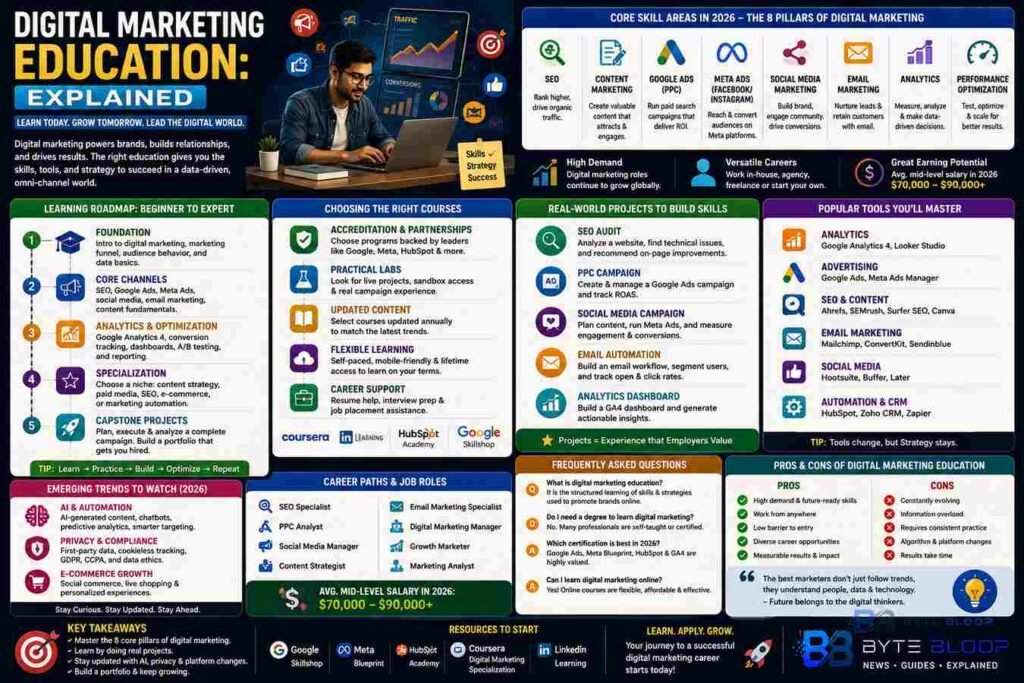
Modern digital marketing curricula typically cover eight foundational pillars: SEO, content marketing, Google Ads (PPC), Meta Ads, social media marketing, email marketing, analytics, and performance optimization. Each pillar builds on the last, creating a comprehensive skill set that prepares students for real‑world challenges. For example, mastering SEO involves keyword research, on‑page optimization, and technical audits, while content marketing requires storytelling, editorial planning, and distribution tactics.
Learning Roadmap: Beginner to Expert
The most effective learning paths start with fundamentals—understanding audience behavior, channel selection, and basic metrics—before progressing to advanced topics like AI‑driven personalization and programmatic buying. A typical roadmap includes:
- Foundation: Intro to digital marketing, marketing funnel, and data basics.
- Core Channels: SEO, paid search, social media, and email.
- Analytics & Optimization: Google Analytics, conversion tracking, and A/B testing.
- Specialization: Choose a niche such as content strategy, paid media, or e‑commerce marketing.
- Capstone Projects: Build a full campaign from research to reporting.
Coursera’s 2026 roadmap recommends this sequence, emphasizing hands‑on projects and industry‑approved certifications.
Choosing the Right Courses
When evaluating programs, look for:
- Accreditation and Partnerships: Programs linked to industry leaders like Google or Meta offer real‑time tools and certification exams.
- Practical Labs: Courses that include live campaigns or sandbox environments provide invaluable experience.
- Updated Content: Digital marketing trends shift rapidly; choose curricula updated at least annually.
- Career Support: Resume workshops, interview prep, and job placement services add tangible value.
Online platforms such as LinkedIn Learning, Modern Marketing Institute, and Impact Digital Marketing Institute provide modular courses that fit different learning styles and budgets.
Real‑World Application and Projects
Hands‑on projects bridge theory and practice. For instance, a student might launch a micro‑campaign on Meta Ads, track performance with Facebook Ads Manager, and optimize based on ROAS metrics. Another project could involve creating an SEO audit for a local business, identifying technical issues, and recommending on‑page changes. These exercises not only build confidence but also produce portfolio pieces that impress recruiters.
Emerging Trends to Watch in 2026
AI and automation are reshaping digital marketing. From AI‑generated content to programmatic buying, staying current with tools like GPT‑style chatbots and predictive analytics will differentiate top talent. Additionally, privacy regulations (e.g., GDPR, CCPA) require marketers to adopt ethical data practices, making compliance a critical skill.
Career Paths and Job Market Outlook
Digital marketing education opens doors to roles such as SEO specialist, paid media analyst, content strategist, social media manager, and data analyst. According to industry reports, the average salary for a mid‑level digital marketer in 2026 ranges from $70,000 to $90,000, with growth potential in niche areas like e‑commerce and AI marketing. Continuous learning and certifications—Google Ads, HubSpot, and Meta Blueprint—remain essential for career advancement.
Key Takeaways
- Digital marketing education covers eight core pillars, from SEO to analytics.
- A structured roadmap moves learners from fundamentals to specialization with real‑world projects.
- Choosing accredited, up‑to‑date courses with hands‑on labs maximizes employability.
- Emerging AI tools and privacy regulations shape the future of digital marketing.
- Career prospects are strong, with diverse roles and competitive salaries in 2026.
Frequently Asked Questions
What is digital marketing education explained?
It refers to the structured learning path that teaches the skills, tools, and strategies needed to succeed in modern digital marketing, covering areas like SEO, paid media, content, social, email, analytics, and performance optimization.
What are the key features of a good digital marketing curriculum?
A comprehensive curriculum includes foundational theory, hands‑on labs, up‑to‑date content, industry certifications, and real‑world projects that build a portfolio.
What are the best use cases for online digital marketing courses?
They are ideal for career switchers, entrepreneurs, and professionals seeking to update skills, offering flexible pacing, modular learning, and access to industry‑approved tools.
What are the pros and cons of pursuing a digital marketing certification?
Pros: validated skills, better job prospects, and access to exclusive tools. Cons: time investment, potential cost, and the need for ongoing learning to keep pace with rapid changes.
Conclusion
Based on the available information and industry analysis, digital marketing education in 2026 equips professionals with a versatile skill set that blends creativity, data, and technology, enabling them to drive measurable business outcomes in an increasingly digital marketplace.
Related Reading
- Top Digital Marketing Certifications for 2026
- How AI Is Transforming Digital Campaigns