Presentation Skills: Explained
Introduction
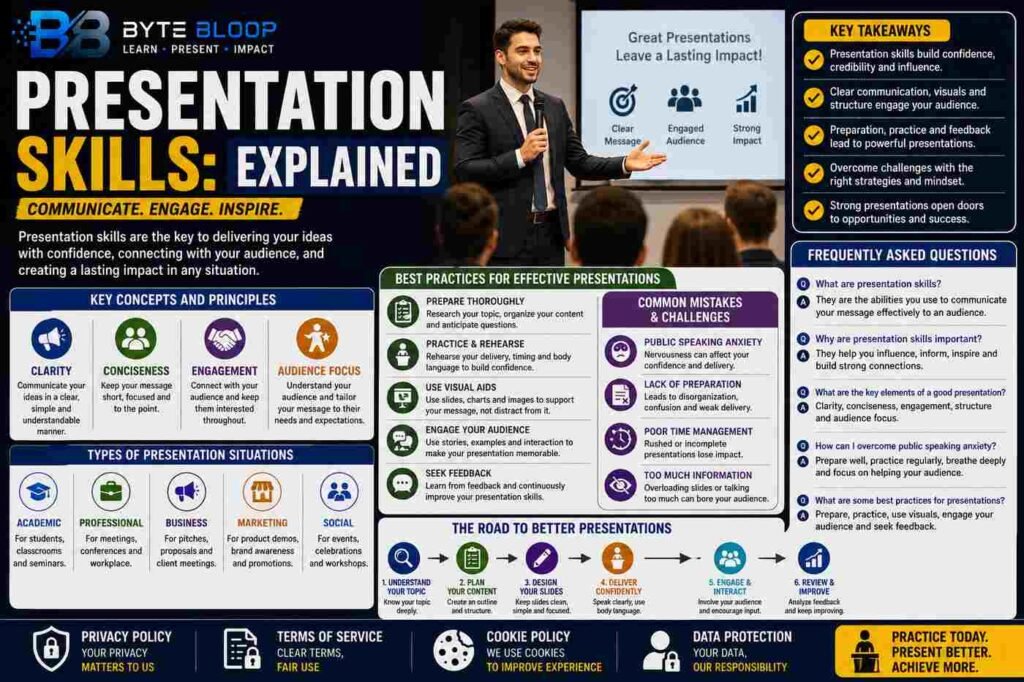
Presentation skills are a crucial aspect of effective communication, encompassing a combination of verbal, non-verbal, structural, and interpersonal capabilities. These skills enable individuals to convey their message, engage their audience, and achieve their desired outcomes. In various contexts, such as academic, professional, or social settings, presentation skills play a vital role in conveying ideas, persuading others, and building relationships. Developing strong presentation skills can significantly enhance one’s confidence, credibility, and overall success. Effective presentation skills involve a range of key elements, including clear and concise communication, engaging visual aids, and a well-structured narrative. By mastering these skills, individuals can deliver compelling presentations that capture their audience’s attention, foster meaningful connections, and drive lasting impact. Moreover, presentation skills are essential for students, professionals, and entrepreneurs alike, as they facilitate the exchange of ideas, foster collaboration, and promote personal and professional growth.
The significance of presentation skills cannot be overstated, as they have a profound impact on an individual’s ability to communicate effectively, build trust, and establish credibility. In today’s fast-paced, technology-driven world, the ability to present ideas, products, or services in a clear, concise, and engaging manner is more critical than ever. By developing strong presentation skills, individuals can differentiate themselves, achieve their goals, and make a lasting impression on their audience. Furthermore, effective presentation skills can help individuals overcome common obstacles, such as public speaking anxiety, and develop a more confident and assertive communication style.
Key Concepts and Principles
Several key concepts and principles underlie effective presentation skills, including clarity, concision, and engagement. A clear and concise message is essential for capturing the audience’s attention, conveying complex ideas, and avoiding confusion. Engagement is also critical, as it enables presenters to build a connection with their audience, foster a sense of community, and promote active listening. Additionally, presenters must consider their audience’s needs, preferences, and expectations, tailoring their message and delivery to resonate with their audience.
Best Practices for Effective Presentations
To deliver effective presentations, individuals should adhere to several best practices, including thorough preparation, rehearsal, and feedback. Preparation involves researching the topic, organizing the content, and anticipating questions and concerns. Rehearsal helps presenters refine their delivery, timing, and body language, while feedback provides valuable insights and suggestions for improvement. Moreover, presenters should focus on their audience, using storytelling techniques, visual aids, and interactive elements to engage and motivate their audience.
Common Mistakes and Challenges
Despite the importance of presentation skills, many individuals struggle with common mistakes and challenges, such as public speaking anxiety, lack of preparation, and poor time management. Public speaking anxiety can be overwhelming, causing presenters to feel nervous, distracted, and unable to focus. Lack of preparation can lead to disorganization, confusion, and a lack of clarity, while poor time management can result in rushed or incomplete presentations. To overcome these challenges, individuals should develop strategies for managing their anxiety, preparing thoroughly, and allocating their time effectively.
Examples and Case Studies
Real-world examples and case studies can provide valuable insights and inspiration for developing effective presentation skills. For instance, a successful entrepreneur might use storytelling techniques to convey their vision, values, and mission, while a teacher might use interactive elements to engage their students and promote active learning. By analyzing these examples and case studies, individuals can identify best practices, learn from others’ experiences, and develop their own unique presentation style.
Key Takeaways
- Developing strong presentation skills is essential for effective communication, confidence, and success.
- Clear and concise communication, engaging visual aids, and a well-structured narrative are key elements of effective presentation skills.
- Presentation skills are critical for students, professionals, and entrepreneurs alike, facilitating the exchange of ideas, collaboration, and personal and professional growth.
- Common mistakes and challenges, such as public speaking anxiety, lack of preparation, and poor time management, can be overcome with strategies and best practices.
- Real-world examples and case studies can provide valuable insights and inspiration for developing effective presentation skills.
Frequently Asked Questions
What are presentation skills?
Presentation skills refer to the combination of verbal, non-verbal, structural, and interpersonal capabilities that enable individuals to communicate effectively and achieve their desired outcomes.
Why are presentation skills important?
Presentation skills are essential for effective communication, confidence, and success, as they facilitate the exchange of ideas, collaboration, and personal and professional growth.
What are the key elements of effective presentation skills?
The key elements of effective presentation skills include clear and concise communication, engaging visual aids, and a well-structured narrative.
How can I overcome public speaking anxiety?
To overcome public speaking anxiety, individuals can develop strategies such as thorough preparation, rehearsal, and feedback, as well as techniques for managing their anxiety and focusing on their audience.
What are some best practices for effective presentations?
Best practices for effective presentations include thorough preparation, rehearsal, and feedback, as well as a focus on the audience, using storytelling techniques, visual aids, and interactive elements to engage and motivate the audience.
Conclusion
Based on the available information and industry analysis, developing strong presentation skills is essential for effective communication, confidence, and success, and can be achieved through a combination of preparation, practice, and feedback, as well as a focus on the audience and the use of engaging visual aids and storytelling techniques.
Related Reading
- Effective Communication Strategies
- Public Speaking Tips and Techniques