Graphic Design Education: Explained
Introduction
Graphic design is the art of communicating ideas through visual elements. It blends creativity with technical skill, shaping everything from logos and packaging to digital interfaces and advertising campaigns. In today’s media‑rich world, designers are essential for brands that want to stand out and connect with audiences. Studying graphic design equips students with a toolkit that includes typography, color theory, layout, and brand strategy, all of which are transferable across industries. Whether you aim to work in an agency, a corporate marketing team, or launch a freelance practice, a solid educational foundation helps you build a compelling portfolio and navigate the evolving design landscape. Many universities and online platforms now offer specialized programs that combine theory with hands‑on projects, ensuring graduates are ready for real‑world challenges. Understanding the structure of graphic design education, from core courses to industry partnerships, can help you choose the right path and accelerate your career trajectory.
Core Curriculum and Skill Set
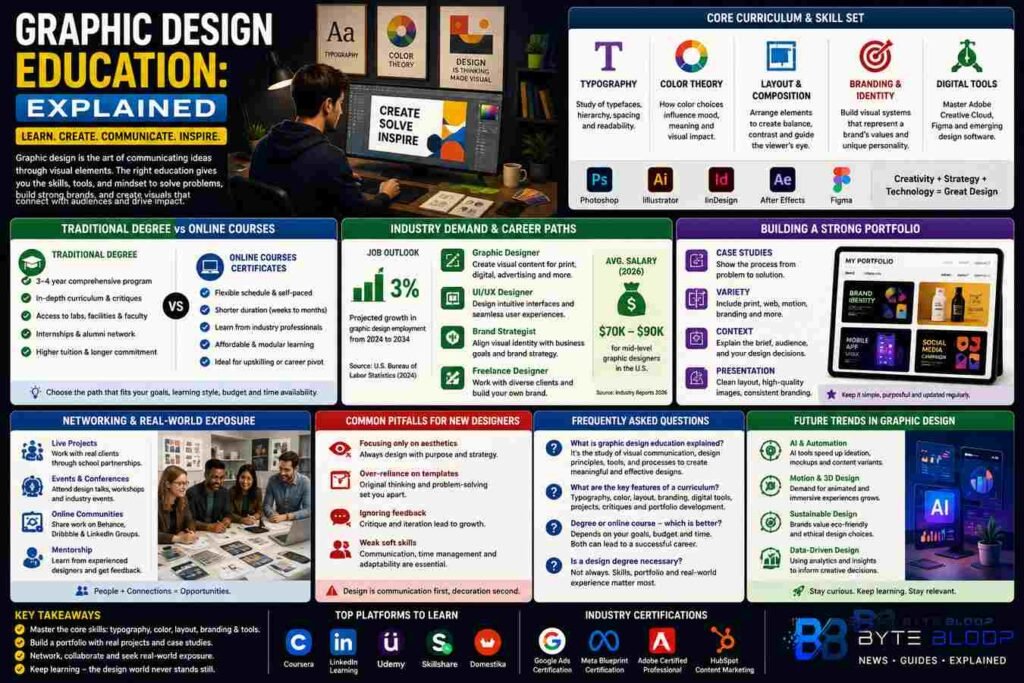
At the heart of graphic design programs are courses that teach the visual language of communication. Students learn how to create hierarchy, balance, and rhythm using color, typography, and composition. Core subjects often include:
- Typography – the study of typefaces, spacing, and readability.
- Color Theory – how color choices influence mood and meaning.
- Layout & Composition – arranging elements to guide the viewer’s eye.
- Branding & Identity – developing visual systems that represent a company’s values.
- Digital Tools – proficiency in Adobe Creative Cloud, Figma, and emerging design software.
Beyond the classroom, many programs emphasize portfolio development. Students are encouraged to tackle real briefs, collaborate with classmates, and iterate based on feedback, mirroring the iterative nature of professional design work.
Choosing Between Traditional Degrees and Online Courses
University degrees in graphic design typically span three to four years, offering a comprehensive curriculum and access to campus resources such as labs and industry guest speakers. They also provide networking opportunities through internships and alumni connections, which can be crucial for early career placement. However, a bachelor’s degree often comes with higher tuition and a longer time commitment.
Online courses and certificates have surged in popularity, especially for learners who need flexibility. Platforms like Coursera and specialized bootcamps offer modules on typography, branding, and UI/UX design, often taught by industry professionals. These programs are usually shorter—ranging from a few weeks to a year—and can be completed part‑time. They’re ideal for self‑directed learners who can manage their own schedule and are looking to supplement or pivot their skill set without a full degree.
Industry Demand and Career Paths
The U.S. Bureau of Labor Statistics projects a 3% growth in graphic design employment from 2024 to 2034, reflecting steady demand for visual communication across sectors. Common roles include:
- Graphic Designer – creating visual content for print and digital media.
- UI/UX Designer – focusing on user interface aesthetics and experience flow.
- Brand Strategist – aligning visual identity with business objectives.
- Freelance Designer – offering specialized services to a diverse client base.
Many designers start in agency settings, where they handle multiple briefs and learn to meet tight deadlines. Others gravitate toward in‑house teams, contributing to cohesive brand strategies across product lines. Freelancers often enjoy creative freedom but must also master client management, contracts, and business operations.
Building a Strong Portfolio
A portfolio is the designer’s résumé. It should showcase a range of work that demonstrates technical skill, creative thinking, and problem‑solving ability. Key elements include:
- Case Studies – walk through the design process from research to final deliverable.
- Variety – include print, web, motion, and branding projects.
- Context – explain the brief, target audience, and design decisions.
- Professional Presentation – use clean layouts, high‑resolution images, and consistent branding.
Regularly updating your portfolio with fresh projects keeps it relevant and signals ongoing growth to potential employers or clients.
Networking and Real‑World Exposure
Design education is most effective when paired with industry engagement. Many programs partner with local businesses for live projects, giving students a taste of client communication and project management. Attending design conferences, workshops, and meet‑ups can also broaden your perspective and open doors to mentorship opportunities. Online communities—such as Behance, Dribbble, and LinkedIn groups—allow you to showcase work, receive feedback, and stay current with industry trends.
Common Pitfalls for New Designers
New designers often focus too narrowly on aesthetics, neglecting the strategic purpose behind a design. Remember that every visual choice should serve a communication goal. Another mistake is over‑reliance on templates; originality and problem‑solving set you apart. Finally, many beginners underestimate the importance of soft skills—communication, time management, and adaptability—essential for thriving in collaborative environments.
Key Takeaways
- Core curriculum covers typography, color, layout, branding, and digital tools.
- University degrees offer depth and networking; online courses provide flexibility and speed.
- Portfolio case studies and real‑world projects are critical for career success.
- Designers must balance creative vision with strategic communication to avoid common pitfalls.
Frequently Asked Questions
What is graphic design education explained?
Graphic design education explains the blend of artistic creativity and technical skill needed to create visual communication that conveys messages effectively.
What are the key features of a graphic design curriculum?
Key features include courses in typography, color theory, layout, branding, and proficiency with industry-standard tools like Adobe Creative Cloud and Figma.
What are the best use cases for pursuing a graphic design degree versus an online certificate?
A degree is ideal for comprehensive learning, campus resources, and networking; an online certificate suits those needing flexibility, quick skill acquisition, or a career pivot.
What are the pros and cons of freelance graphic design?
Pros include creative freedom and flexible hours; cons involve inconsistent income, client acquisition challenges, and the need to manage business aspects.
Conclusion
Based on the available information and industry analysis, graphic design education provides a structured pathway to mastering visual communication skills that are in demand across multiple sectors. By combining foundational theory with hands‑on projects, students build portfolios that showcase both creativity and strategic thinking, positioning them for roles in agencies, corporate teams, or freelance practice. Continuous learning, networking, and real‑world exposure further enhance career prospects, ensuring designers remain adaptable in an evolving digital landscape.
Related Reading
- Top 10 Graphic Design Tools Every Beginner Should Know