On-Page SEO: Explained
Introduction
This guide covers on-page seo explained in detail. Understanding on-page seo explained helps readers make better, more informed decisions.
On‑page SEO is the foundation of any successful digital marketing strategy. It refers to the optimization of individual web pages so search engines can understand their content, relevance, and authority. In 2026, the focus has shifted from keyword stuffing to intent, E‑E‑A‑T, and AI‑search readiness, making on‑page SEO a dynamic blend of technical, creative, and analytical tasks. By aligning your
page structure, metadata, and internal linking with user intent and search engine algorithms, you can improve visibility, drive higher click‑through rates, and position your content in AI answer boxes. This guide breaks down the core components, offers a practical checklist, and shows how to adapt to the evolving search landscape. Understanding on-page seo explained helps readers make better, more informed decisions.
1. The Anatomy of On‑Page SEO — on-page seo explained
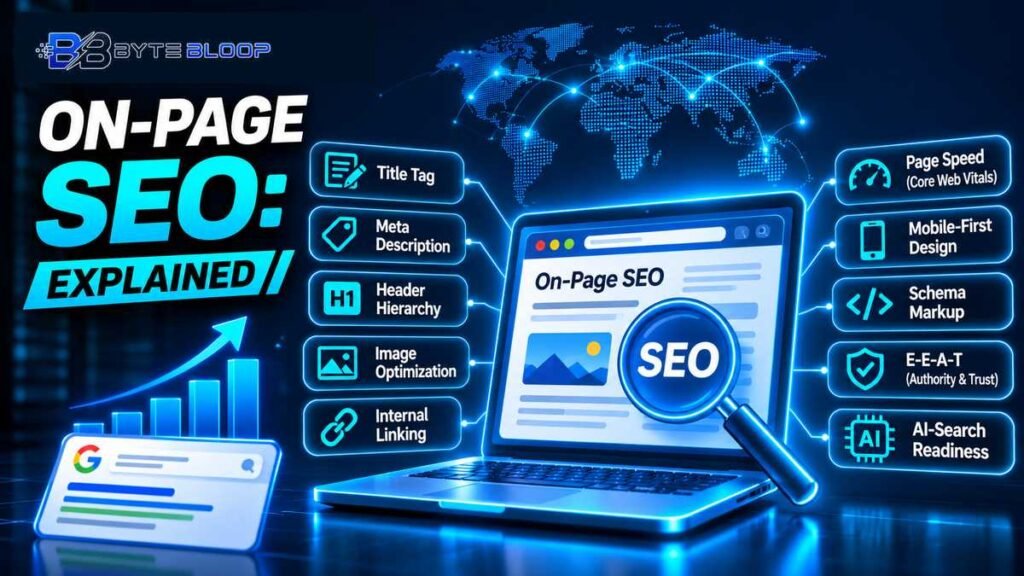
Every page on your site is a potential ranking unit. On‑page SEO looks at: Understanding on-page seo explained helps readers make better, more informed decisions.
- Content quality – relevance, depth, and freshness.
- HTML structure – title tags, meta descriptions, header hierarchy.
- Internal linking – contextual connections that distribute link equity.
- Technical signals – mobile friendliness, page speed, schema markup.
Search engines evaluate these signals to determine how well a page satisfies a query. Understanding on-page seo explained helps readers make better, more informed decisions.
2. Intent‑Driven Content
Search intent is the driver behind every query. In 2026, intent categories include informational, navigational, transactional, and commercial‑consideration. Your content should map directly to the intent of your target keyword. For example, a blog post answering “how to set up a WordPress site” targets informational intent, while a product page for a premium router targets transactional intent. Aligning content with intent boosts relevance and improves chances of appearing in AI‑generated snippets. Understanding on-page seo explained helps readers make better, more informed decisions.
3. Title Tags and Meta Descriptions
Title tags are the first impression in SERPs. Keep them under 60 characters, include the primary keyword, and craft a compelling hook. Meta descriptions, while not a ranking factor, influence click‑through rates; aim for 150–160 characters that summarize the page’s value. Both elements should reflect the page’s core message and user intent. Understanding on-page seo explained helps readers make better, more informed decisions.
4. Header Hierarchy and Readability
Use H1 for the main headline and H2‑H6 to structure subsections. A clear hierarchy helps search engines parse the content flow and improves accessibility for screen readers. Break up long paragraphs, use bullet lists, and incorporate synonyms to reinforce semantic relevance. Understanding on-page seo explained helps readers make better, more informed decisions.
5. Image Optimization
Images should load quickly and convey context. Compress files, use descriptive file names, and add alt attributes that describe the image content. Structured data can also highlight image galleries or product images in rich results. Understanding on-page seo explained helps readers make better, more informed decisions.
6. Internal Linking Strategy
Internal links create a web of relevance. Link from high‑authority pages to newer content to pass equity and signal topical importance. Use keyword‑rich anchor text sparingly; natural language anchors are preferred by modern algorithms.
7. Technical SEO Foundations
Page speed, mobile‑first design, and secure HTTPS are non‑negotiable. Core Web Vitals—Largest Contentful Paint, First Input Delay, Cumulative Layout Shift—directly affect rankings. Implement schema markup (JSON‑LD) to provide search engines with explicit context, enabling rich snippets and AI answer eligibility.
8. E‑E‑A‑T and Authority Signals
Expertise, Experience, Authoritativeness, and Trustworthiness (E‑E‑A‑T) are now central to ranking. Showcase author credentials, provide citations, and maintain a transparent privacy policy. Authority signals such as backlinks and social shares reinforce credibility.
9. AI‑Search Readiness
AI assistants pull content from the web to answer queries. Structure your pages with clear, concise answers, use FAQSchema, and provide structured data for featured snippets. Pages that answer questions directly are more likely to surface in AI responses.
10. On‑Page SEO Checklist (2026)
- Define target keyword and search intent.
- Craft unique title tag and meta description.
- Structure content with
H1‑H6hierarchy. - Optimize images and add alt text.
- Implement schema markup for rich results.
- Ensure mobile‑first design and fast loading.
- Link internally with contextual anchors.
- Showcase author expertise and E‑E‑A‑T signals.
- Test for AI‑search eligibility (FAQSchema, concise answers).
- Monitor Core Web Vitals and adjust as needed.
Key Takeaways
- Align content with user intent to boost relevance.
- Use concise, keyword‑rich titles and meta descriptions for better CTR.
- Implement schema and structured data to qualify for AI answer boxes.
- Prioritize mobile speed and Core Web Vitals for ranking stability.
- Maintain E‑E‑A‑T signals to build authority and trust.
Frequently Asked Questions
What is on‑page SEO explained?
On‑page SEO refers to the optimization of individual web pages—content, HTML tags, internal links, and technical elements—to improve search engine rankings and user experience.
What are the key features of on‑page SEO?
Key features include title tags, meta descriptions, header hierarchy, image alt text, internal linking, schema markup, mobile optimization, Core Web Vitals, and E‑E‑A‑T signals.
What are the best use cases for on‑page SEO?
On‑page SEO is essential for new content launches, product pages, blog posts, landing pages, and any page that needs to rank for specific queries or appear in AI answer boxes.
What are the pros and cons of on‑page SEO?
Pros: direct control over rankings, improved user experience, higher CTR, AI search visibility. Cons: time‑intensive, requires continuous updates, and relies on accurate data and analytics.
Conclusion
Based on the available information and industry analysis, on‑page SEO provides the structural foundation that aligns content, technical performance, and user intent, enabling websites to rank higher, capture organic traffic, and secure positions in AI‑driven answer boxes. By systematically applying these on‑page tactics, marketers can future‑proof their sites against evolving search algorithms and deliver value to both users and search engines.
Related Reading
- SEO Basics: How Search Engines Rank Websites
Related Articles