Digital Twins: Explained | ByteBloop Guide
Digital Twins: Explained Introduction Digital twins are more than a buzzword; they are a digital replica of a physical object, system, or process that mirrors…
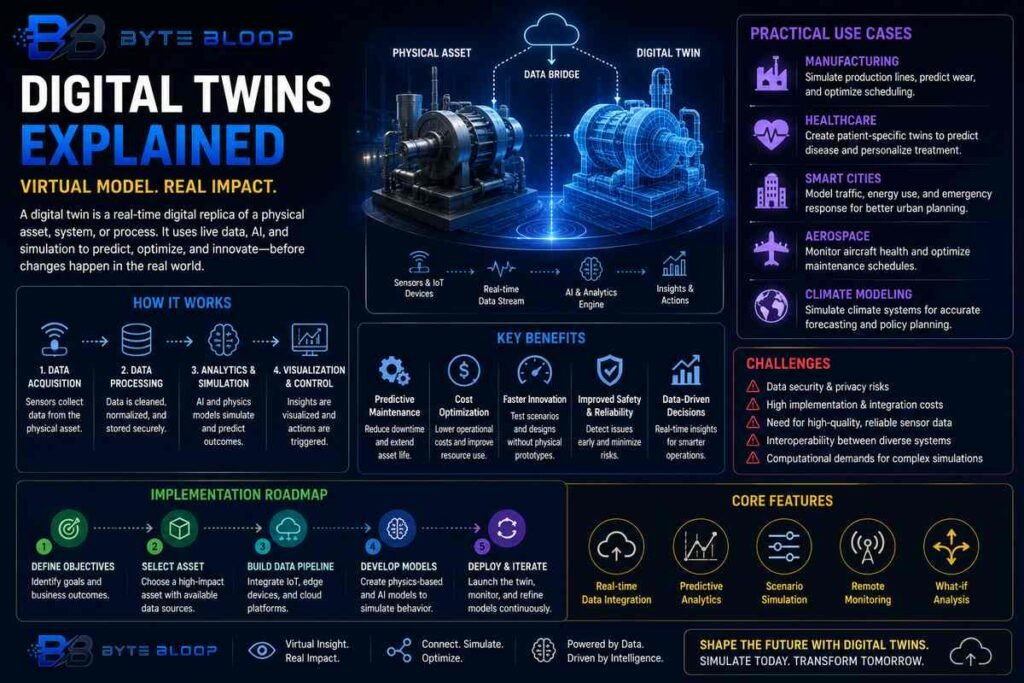
Digital Twins: Explained Introduction Digital twins are more than a buzzword; they are a digital replica of a physical object, system, or process that mirrors…
Smart Cities: Explained Introduction Smart cities are more than a buzzword; they represent a paradigm shift in urban planning where data, connectivity, and digital services…
Inventory Management: Explained Introduction Inventory management is the backbone of any operation that deals with physical goods. It involves acquiring, storing, tracking, and ultimately moving…
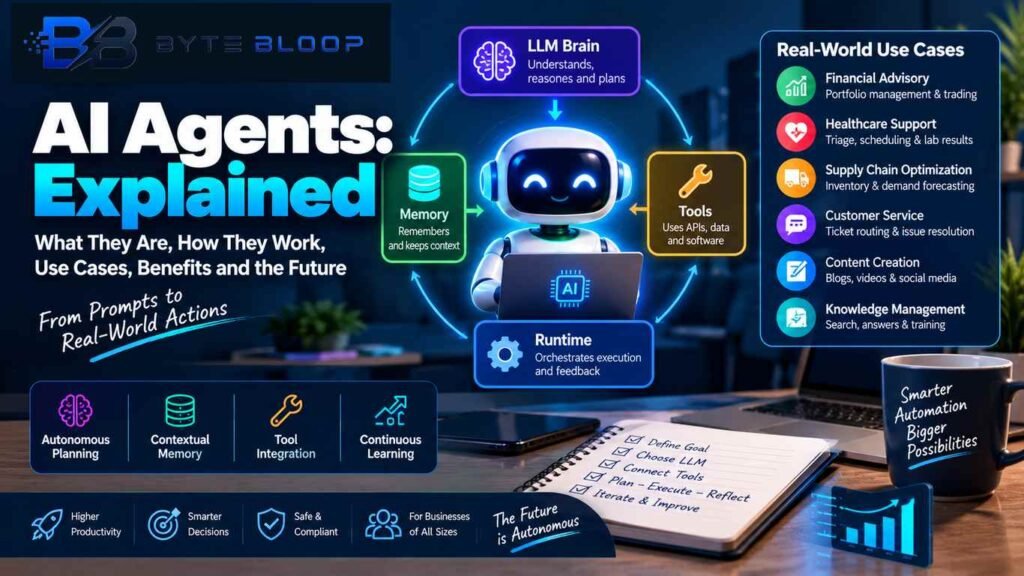
AI Agents Explained: 10 Key Components, Use Cases & Safety in 2026 Introduction AI agents explained in simple terms, they are software systems that can…
Generative AI: Explained Introduction Generative AI has moved from a niche research topic to a mainstream technology reshaping how we create and consume content. At…
Deep Learning: Explained Introduction Deep learning has become the engine behind many of the most impressive artificial intelligence breakthroughs of the last decade. At its…

Business Websites: Explained Introduction In today’s digital economy, a business website is no longer an optional asset—it’s a core component of brand strategy, customer engagement,…
Computer Vision: Explained Introduction Computer vision is a branch of artificial intelligence that equips machines with the ability to interpret visual data—images and video—much like…
Natural Language Processing: Explained Introduction Natural Language Processing, or NLP, sits at the intersection of computer science and linguistics, enabling machines to read, interpret, and…
6G Research: Explained Introduction Sixth‑generation cellular networks, or 6G, are the next frontier beyond 5G, promising speeds that eclipse current limits, latency that approaches zero,…