Battery Technology: How It Works
Introduction (Battery Technology How It Works)
Battery Technology How It Works is a topic worth understanding well. Battery technology is the backbone of the modern, mobile world. From the tiny cells that keep smartphones alive to the massive packs that power electric vehicles, batteries store and deliver energy on demand. At its core, a battery converts chemical energy into electrical energy through redox reactions, a process that has evolved from simple lead‑acid designs to sophisticated lithium‑ion chemistries and beyond.
Recent breakthroughs in solid‑state electrolytes, silicon anodes, and metal‑air systems promise higher energy density, faster charging, and improved safety. Understanding these fundamentals helps consumers make informed choices and engineers design the next generation of devices. This guide breaks down the science behind batteries, highlights emerging technologies, and explains why they matter for everyday life and the global transition to renewable energy.
How a Conventional Battery Works
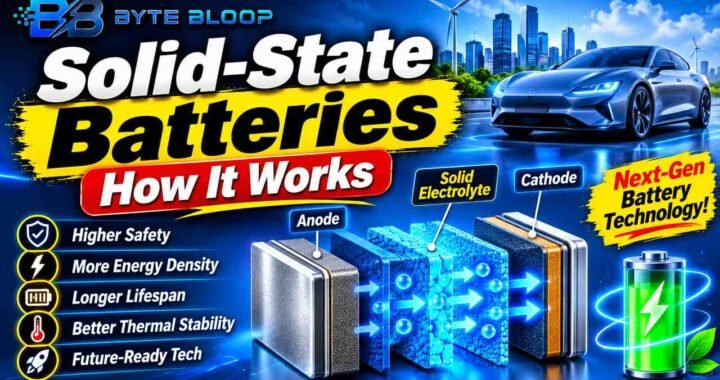
In a typical rechargeable cell, two electrodes—anode and cathode—are separated by an electrolyte that conducts ions. When the battery discharges, electrons flow from the anode to the cathode through an external circuit, powering a device. Simultaneously, ions move through the electrolyte to maintain charge balance. Recharging reverses this flow, restoring the original chemical state. The most common modern chemistries use lithium ions moving between a graphite anode and a layered oxide cathode, delivering high energy density and long cycle life.
Key Components and Their Roles
- Anode: Stores lithium during charging; releases it during discharge.
- Cathode: Accepts lithium ions; its composition determines voltage and capacity.
- Electrolyte: Medium for ion transport; liquid electrolytes are cheap but flammable, while solid electrolytes offer safety.
- Separator: Physical barrier preventing short circuits while allowing ion flow.
Emerging Technologies Shaping the Future
According to the New Battery Technologies 2026 Are Changing The … report, manufacturers are shifting to scalable, cost‑effective processes that lower cell prices and improve performance. Solid‑state batteries, which replace liquid electrolytes with solid materials, promise up to 30% higher energy density and reduced fire risk. Silicon anodes, discussed in the Recent advancements and perspectives in lithium‑ion … paper, can store more lithium than graphite, potentially doubling capacity. Metal‑air batteries, highlighted in the Breaking It Down: Next‑Generation Batteries series, aim to use ambient oxygen as a reactant, offering theoretical energy densities comparable to gasoline.
This matters directly for anyone exploring battery technology how it works.
Design Considerations for Electric Vehicles
The Electric Battery Pack Guide 2026 Technology Types and Trends outlines how pack architecture affects range, charging speed, and thermal management. Engineers now favor modular designs that allow individual cells to be swapped or upgraded, extending vehicle lifespan. Safety protocols, such as passive thermal runaway protection, are becoming standard, reducing the risk of fires during high‑speed charging.
Getting battery technology how it works right can make a real difference.
Recycling and Sustainability
As battery demand surges, recycling becomes critical. The Guide to Electric Vehicle Battery Technology | Updated 2026 notes that current processes recover valuable metals like cobalt and nickel, but efficiency remains below 60%. Research into closed‑loop recycling—where batteries are disassembled, reprocessed, and reassembled—could increase recovery rates and lower environmental impact.
That is a core part of understanding battery technology how it works.
Practical Tips for Consumers
- Choose batteries with certified safety ratings (e.g., UL, CE).
- Use manufacturer‑approved chargers to avoid over‑charging.
- Store batteries at moderate temperatures (20–25 °C) to prolong lifespan.
- Regularly monitor battery health indicators on devices.
Key Takeaways
- Lithium‑ion chemistry powers most consumer devices and EVs.
- Solid‑state and silicon‑anode batteries offer higher energy density and safety.
- Modular pack designs improve EV range and enable easier upgrades.
- Recycling efficiency is a growing challenge for sustainable battery use.
- Manufacturers are adopting cost‑effective, scalable production methods.
Frequently Asked Questions
What is the basic principle behind battery operation?
A battery converts chemical energy into electrical energy via redox reactions between its electrodes, with ions moving through an electrolyte to maintain charge balance.
Many readers look into battery technology how it works for exactly this reason.
What are the key features of next‑generation batteries?
Higher energy density, faster charging, improved safety, and use of solid electrolytes or silicon anodes are hallmarks of emerging battery chemistries.
It is worth revisiting battery technology how it works as things develop.
What are the best use cases for solid‑state batteries?
They are ideal for electric vehicles and portable electronics where safety and long range are critical, thanks to their higher energy density and lower flammability.
Battery Technology How It Works remains highly relevant here.
What are the pros and cons of lithium‑ion batteries?
Pros include high energy density, long cycle life, and mature manufacturing; cons are limited capacity compared to emerging chemistries, cost of rare metals, and recycling challenges.
This is a key consideration when it comes to battery technology how it works.
Conclusion
Based on the available information and industry analysis, battery technology has evolved from simple lead‑acid cells to complex lithium‑ion and emerging solid‑state systems that deliver higher energy density, faster charging, and improved safety. These advancements are driving the adoption of electric vehicles, expanding renewable energy storage, and shaping consumer electronics. Continued research into sustainable materials, scalable manufacturing, and efficient recycling will be essential to meet the growing global demand while minimizing environmental impact.
Related Reading
- Understanding Energy Density in Batteries
Sources & References
- New Battery Technologies 2026 Are Changing The …
- Breaking It Down: Next-Generation Batteries
- Electric Battery Pack Guide 2026 Technology Types and Trends
- Recent advancements and perspectives in lithium-ion …
- Guide to Electric Vehicle Battery Technology | Updated 2026
Related Articles