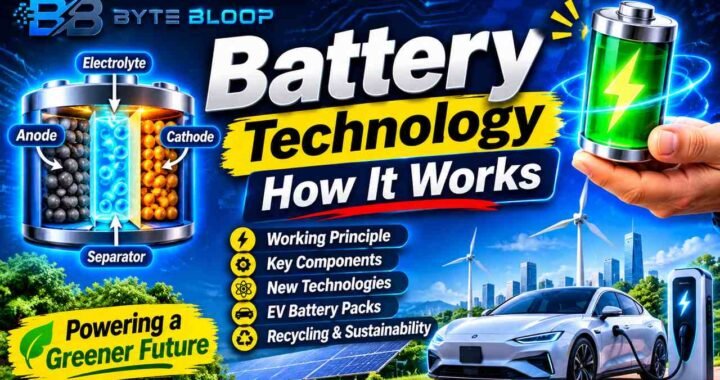
Solid‑State Batteries: How It Works
Introduction (Solid-state Batteries How It Works)
Solid-state Batteries How It Works is a topic worth understanding well. Solid‑state batteries (SSBs) promise to reshape energy storage by replacing the liquid electrolytes that power today’s lithium‑ion cells with a solid material that conducts ions. This shift brings higher energy density, improved safety, and better thermal stability, making SSBs a prime candidate for next‑generation electric vehicles, portable electronics, and grid‑scale storage. The core idea is simple: use a solid electrolyte—often a ceramic, glass, or polymer—between the anode and cathode so that ions move through a solid lattice rather than a flammable liquid. The result is a cell that can pack more energy per kilogram, operate at higher temperatures, and resist dendrite formation that can short‑circuit conventional batteries.
In practice, the solid electrolyte must be both ionically conductive and mechanically robust. Researchers have identified three main families: sulfide‑based, oxide‑based, and polymer‑based electrolytes. Each offers distinct trade‑offs: sulfides provide high conductivity but can be moisture sensitive; oxides are stable and non‑reactive but usually require high temperatures to achieve conductivity; polymers combine flexibility and safety but lag in ionic mobility. Recent breakthroughs in composite electrolytes—mixing ceramics with polymers—aim to combine the best of both worlds. According to a 2026 review, some all‑solid‑state cells have reached energy densities of up to 500 Wh/kg, a dramatic jump from the 250 Wh/kg typical of current lithium‑ion batteries.
Beyond the electrolyte, the electrode materials also evolve. Traditional graphite anodes can be replaced by lithium metal, which stores far more lithium per unit mass, or by silicon composites that expand less during charging. Cathodes such as nickel‑cobalt‑manganese (NCM) or lithium iron phosphate (LFP) remain common, but new chemistries like lithium‑sulfur or solid‑state variants of NMC are under active development. The solid interface between electrode and electrolyte is critical; it must accommodate volume changes and prevent interfacial resistance that can sap performance. Engineers use techniques such as surface coatings, nanostructuring, and engineered interlayers to maintain a stable contact over thousands of cycles.
This matters directly for anyone exploring solid-state batteries how it works.
One of the most compelling advantages of SSBs is safety. Without a liquid that can leak or ignite, the risk of thermal runaway is markedly reduced. In an all‑solid‑state cell, the electrolyte remains solid even at elevated temperatures, so it does not vaporize or decompose as easily as a liquid electrolyte would. This property is especially valuable for electric vehicles, where a catastrophic battery failure can have serious safety implications. Moreover, the solid electrolyte’s inherent mechanical strength can physically block dendrite growth, a common cause of short circuits in lithium‑metal cells.
Getting solid-state batteries how it works right can make a real difference.
However, challenges remain. Manufacturing SSBs at scale is more complex than producing conventional lithium‑ion cells. The solid electrolyte often requires high‑temperature sintering or vacuum deposition, which can increase production costs. Maintaining intimate contact between solid components also demands precise assembly techniques. Additionally, some solid electrolytes exhibit lower ionic conductivity at room temperature, necessitating additives or operating temperature adjustments. Despite these hurdles, the industry is rapidly advancing: several automotive suppliers have announced prototype vehicles powered by solid‑state cells, and multiple startups are scaling up production lines.
That is a core part of understanding solid-state batteries how it works.
In summary, solid‑state batteries represent a transformative leap in energy storage technology. By harnessing solid electrolytes, they achieve higher energy densities, superior safety, and improved thermal performance. While manufacturing and material challenges persist, ongoing research and industrial investment suggest that SSBs will soon transition from laboratory prototypes to mainstream products, potentially redefining the landscape of electric mobility and renewable energy storage.
Many readers look into solid-state batteries how it works for exactly this reason.
Key Takeaways
- Solid‑state batteries use a solid electrolyte, boosting safety and energy density.
- Three main electrolyte families—sulfide, oxide, polymer—offer different trade‑offs.
- Lithium‑metal and silicon anodes can further increase capacity in SSBs.
- Manufacturing complexity and cost remain the biggest hurdles to mass adoption.
- SSBs are already in prototype electric vehicles and grid‑scale projects.
Frequently Asked Questions
What is a solid‑state battery?
A solid‑state battery replaces the liquid electrolyte in conventional lithium‑ion cells with a solid material that conducts ions between the anode and cathode.
It is worth revisiting solid-state batteries how it works as things develop.
What are the key features of solid‑state batteries?
Higher energy density, improved safety, better thermal stability, and reduced risk of dendrite‑induced short circuits.
Solid-state Batteries How It Works remains highly relevant here.
What are the best use cases for solid‑state batteries?
Electric vehicles, portable electronics, and grid‑scale energy storage where safety and high energy density are critical.
This is a key consideration when it comes to solid-state batteries how it works.
What are the pros and cons of solid‑state batteries?
Pros include higher capacity and safety; cons involve higher manufacturing cost, complex assembly, and sometimes lower room‑temperature ionic conductivity.
Conclusion
Based on the available information and industry analysis, solid‑state batteries provide a promising pathway to safer, higher‑capacity energy storage, with potential to revolutionize electric mobility and renewable integration. While manufacturing challenges persist, ongoing research and pilot deployments indicate that commercial adoption will accelerate in the coming years, ushering in a new era of battery technology.
Related Reading
- Electric Vehicle Battery Trends in 2027
Sources & References
- Solid-state batteries: how they work
- How solid-state battery technology is changing energy storage
- Solid-State Batteries: Materials, Technologies, and Future
- The future of sustainable lithium-ion batteries: Ecodesign …
- Solid-state battery
- All-Solid-State Battery: The Future of Energy Storage Explained
- Solid‑State Batteries: The 2026 Guide to Chemistry, Challenges, and Status
Related Articles