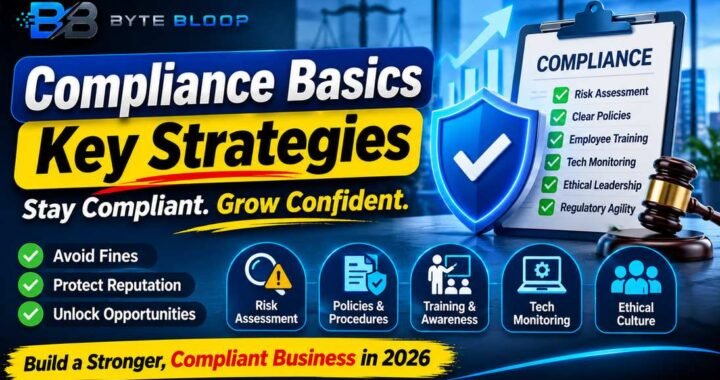
Business Continuity: Key Strategies
Introduction
Business Continuity Key Strategies is a topic worth understanding well. In an era of climate change, cyber threats, and global supply chain shocks, the ability to keep operations humming during a crisis has moved from nice-to-have to essential. Business continuity is the discipline that ensures critical functions persist when unexpected events strike. A robust continuity plan protects revenue, safeguards customer trust, and meets regulatory obligations. It also provides a competitive edge: companies that can pivot quickly retain market share while rivals stall.
Small businesses, often overlooked, face the same risks; a 2026 guide recommends a five‑step plan that starts with risk identification and ends with continuous testing. By integrating technology, people, and processes, organizations can create resilient operations that weather storms and emerge stronger.
1. Map Core Business Functions
The first step is to identify the services and processes that define your value proposition. According to Business Continuity Planning: How to Plan for Disruptions, a thorough business impact analysis pinpoints which functions cannot afford downtime. Documenting dependencies—such as suppliers, IT systems, and personnel—creates a clear picture of what must stay online.
2. Build a Risk‑Based Response Framework
Risk assessment is the engine of continuity planning. How to Build and Maintain a Business Continuity Plan in … outlines a four‑step approach: decide who is involved, define scope, run impact analysis, and assess risks. By categorizing threats—natural disasters, cyber incidents, or operational failures—you can prioritize resources and develop targeted mitigation strategies.
3. Design Redundant Systems and Alternate Sites
Redundancy reduces single points of failure. Cloud‑based backups, dual‑data‑center architectures, and remote work capabilities ensure that if one site goes down, another can take over. The 2026 guide recommends testing failover scenarios quarterly to confirm readiness.
This matters directly for anyone exploring business continuity key strategies.
4. Empower a Resilient Workforce
People are the backbone of continuity. Rethinking team structures, as highlighted by Business Continuity Strategies | Planning & Risk …, involves cross‑training staff and establishing clear roles during an incident. Communication plans—internal and external—keep stakeholders informed and reduce panic.
5. Integrate Technology and Automation
Automation accelerates recovery. Business continuity management (BCM) software, discussed in Business Continuity Management: A Complete Guide (2026), tracks incidents, automates alerts, and supports the ISO 22301 Plan‑Do‑Check‑Act cycle. Integrating incident‑response tools with IT service management streamlines restoration and reduces human error.
Getting business continuity key strategies right can make a real difference.
6. Conduct Continuous Testing and Improvement
Planning without practice is futile. Regular tabletop exercises, simulated outages, and real‑time drills validate assumptions and reveal gaps. After each test, a post‑mortem analysis feeds back into the plan, ensuring that lessons learned become institutional knowledge.
7. Align with Regulatory and Industry Standards
Compliance adds a layer of accountability. Whether you’re in finance, healthcare, or retail, regulations often mandate specific continuity requirements. Aligning your plan with frameworks such as ISO 22301 or NIST SP 800‑34 ensures that you meet legal obligations while building best practices.
That is a core part of understanding business continuity key strategies.
8. Foster a Culture of Resilience
Resilience is as much mindset as it is process. Leadership must champion continuity, allocating budget, and embedding it into strategic planning. When employees see continuity as part of daily operations rather than a siloed function, adoption improves and response times shrink.
Key Takeaways
- Identify and protect core business functions
- Prioritize risks and design redundant systems
- Empower staff with clear roles and cross‑training
- Automate incident response for rapid recovery
- Test plans regularly and iterate
- Align with ISO 22301 and industry regulations
Frequently Asked Questions
What is business continuity key strategies?
Business continuity key strategies are actionable plans and practices that ensure critical business functions continue during and after disruptive events.
Many readers look into business continuity key strategies for exactly this reason.
What are the key features of a robust continuity plan?
Core features include a detailed business impact analysis, risk assessment, redundant infrastructure, workforce empowerment, automated incident response, regular testing, regulatory alignment, and a culture of resilience.
What are the best use cases for continuity planning?
Use cases span natural disasters, cyber attacks, supply chain disruptions, regulatory compliance, and any scenario where prolonged downtime could damage revenue, reputation, or legal standing.
It is worth revisiting business continuity key strategies as things develop.
What are the pros and cons of automated BCM tools?
Pros: faster incident detection, consistent reporting, and reduced manual effort. Cons: initial cost, potential overreliance on automation, and the need for skilled staff to manage the tools.
Conclusion
Based on the available information and industry analysis, business continuity key strategies provide a structured framework that turns potential crises into manageable events, safeguarding revenue, reputation, and regulatory compliance. By mapping core functions, assessing risks, building redundancy, empowering teams, automating responses, testing rigorously, aligning with standards, and embedding resilience into culture, organizations can transform uncertainty into an opportunity for growth and differentiation.
Related Reading
- Cyber Resilience: Protecting Your Digital Assets
Sources & References
- The Strategic Business Continuity Plan for Small Business — Don’t let a disaster close your doors. Our 2026 guide provides a 5-step business continuity plan for small business to ensure operational …
- Business Continuity Planning: How to Plan for Disruptions …
- How to Build and Maintain a Business Continuity Plan in …
- 8 business continuity strategies: types, examples, template
- A Strategic Guide to Business Continuity and Resilience – GRC
- Business Continuity Strategies | Planning & Risk …
- Business Continuity Management: A Complete Guide (2026)
Related Articles