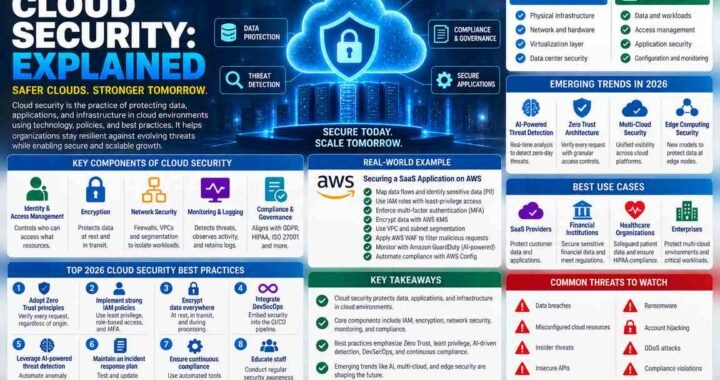
Network Security: Explained

Introduction (Network Security Explained)
Network Security Explained is a topic worth understanding well. Network security is the backbone of any modern digital ecosystem, protecting the flow of data between devices, servers, and users from malicious actors. It blends technology, policy, and people to create a layered defense that guards against unauthorized access, data breaches, and service disruptions. In today’s hyper‑connected world, where 70% of cyber incidents target network vulnerabilities, understanding the fundamentals of network security is essential for both IT professionals and everyday users.
From firewalls and intrusion detection systems to zero‑trust architectures and AI‑driven threat analytics, the field has evolved to counter increasingly sophisticated attacks. Yet the core principle remains the same: keep attackers out, keep data in, and maintain business continuity. This guide breaks down the key components, practical examples, and emerging trends that shape effective network security in 2026. By the end, you’ll know how to assess risks, deploy defenses, and stay ahead of evolving threats.
What Is Network Security?
At its simplest, network security is a set of technologies, policies, and procedures designed to defend communication infrastructures from cyberattacks. According to Fortinet, it covers everything from physical hardware to software applications, ensuring data integrity, confidentiality, and availability. The goal is to prevent unauthorized access while allowing legitimate traffic to flow unimpeded.
Core Components of a Secure Network
Firewalls act as the first line of defense, filtering traffic based on predefined rules. Modern next‑generation firewalls integrate application awareness, intrusion prevention, and threat intelligence feeds.
Intrusion Detection and Prevention Systems (IDPS) monitor network traffic for suspicious patterns and can automatically block malicious packets.
This matters directly for anyone exploring network security explained.
Virtual Private Networks (VPNs) encrypt data in transit, enabling secure remote access to corporate resources.
Network Segmentation divides a network into isolated zones, limiting lateral movement for attackers and containing breaches.
Getting network security explained right can make a real difference.
Zero‑Trust Architecture assumes no implicit trust; every access request is verified, authenticated, and authorized before granting entry.
Practical Examples in Different Environments
Enterprise Networks often deploy a multi‑layered approach: perimeter firewalls, DMZs for public services, internal segmentation, and continuous monitoring via SIEM tools.
That is a core part of understanding network security explained.
Cloud‑Based Infrastructures rely on shared responsibility models, where providers secure the underlying infrastructure while customers manage application‑level controls and identity management.
Home Networks can adopt basic hardening steps: change default router passwords, enable WPA3 encryption, update firmware regularly, and segment guest Wi‑Fi.
Many readers look into network security explained for exactly this reason.
Emerging Trends Shaping 2026 Network Security
Artificial intelligence is now a double‑edged sword; defenders use AI to detect anomalies, while attackers exploit it to craft sophisticated phishing or ransomware campaigns. Zero‑trust models are gaining traction, especially in hybrid work scenarios, as they reduce the attack surface by eliminating implicit trust zones. Ransomware protection has moved beyond backups to include immutable storage and automated isolation of compromised segments.
Data protection strategies now emphasize privacy‑by‑design, ensuring that sensitive information is encrypted both at rest and in transit, and that access is governed by strict identity and access management (IAM) policies.
It is worth revisiting network security explained as things develop.
Common Challenges and How to Overcome Them
One of the biggest hurdles is the human factor. Phishing remains the leading cause of network breaches; continuous security awareness training can mitigate this risk. Another challenge is legacy infrastructure that cannot support modern security protocols. Gradual migration, starting with critical assets, helps maintain business continuity while upgrading defenses.
Budget constraints often lead to under‑investment in security. Prioritizing high‑risk assets, adopting open‑source tools where appropriate, and leveraging cloud security services can stretch limited resources without compromising protection.
Network Security Explained remains highly relevant here.
Key Takeaways
- Network security blends technology, policy, and people to protect data flow.
- Firewalls, IDPS, VPNs, segmentation, and zero‑trust form the core defense layers.
- AI is both a defensive tool and an emerging attack vector.
- Home networks benefit from router hardening, guest isolation, and WPA3 encryption.
- Human awareness training remains critical to counter phishing and social‑engineering attacks.
Frequently Asked Questions
What is network security?
Network security is a set of technologies, policies, and procedures designed to protect data communication infrastructure from unauthorized access, attacks, and data breaches.
What are the key features of modern network security?
Key features include firewalls, intrusion detection/prevention systems, VPNs, network segmentation, zero‑trust architecture, and AI‑driven threat analytics.
This is a key consideration when it comes to network security explained.
What are the best use cases for network segmentation?
Segmentation is ideal for isolating sensitive data zones, containing breaches, and enforcing least‑privilege access in both enterprise and cloud environments.
What are the pros and cons of zero‑trust security?
Pros: reduces attack surface, enforces continuous verification, and limits lateral movement. Cons: requires robust identity management, can increase complexity, and may impact user experience if not properly tuned.
Conclusion
Based on the available information and industry analysis, network security remains the cornerstone of resilient digital operations, combining layered defenses, human vigilance, and adaptive technologies to counter evolving threats in 2026. By implementing structured policies, deploying modern tools, and fostering a security‑aware culture, organizations can safeguard their data, maintain compliance, and ensure uninterrupted service for stakeholders.
Related Reading
- Zero‑Trust Architecture: Principles and Implementation
Related Articles