Off-Page SEO: Explained
Introduction
This guide covers off-page seo explained in detail. Understanding off-page seo explained helps readers make better, more informed decisions.
When most people think of SEO, they picture on‑page tweaks: meta tags, keyword‑rich content, and site speed. Off‑page SEO, however, is the engine that drives your site’s reputation and authority from the outside world. It encompasses every action taken outside your own domain to influence search rankings, from backlinks and social signals to brand mentions and citations. In 2026, search engines are more sophisticated at weighing these external cues, making off‑page optimization a critical component of any comprehensive strategy. By understanding what counts as a high‑quality link, how to cultivate genuine relationships, and how to monitor reputation, marketers can unlock higher visibility, more organic traffic, and stronger conversion rates. This guide breaks down the core concepts, practical techniques, and emerging trends that shape off‑page SEO today. Understanding off-page seo explained helps readers make better, more informed decisions.
Why Off‑Page SEO Matters — off-page seo explained
Search engines view the web as a network of interconnected pages. The more credible and authoritative a site appears within that network, the more likely it is to rank for competitive queries. Backlinks act as votes of confidence; social signals and brand mentions amplify trust; local citations anchor a business in its community. Together, these signals help search engines assess relevance, popularity, and expertise—key pillars of the E-A-T framework that Google emphasizes. Without a robust off‑page foundation, even the best on‑page content can languish in lower tiers of search results. Understanding off-page seo explained helps readers make better, more informed decisions.
Core Off‑Page SEO Elements
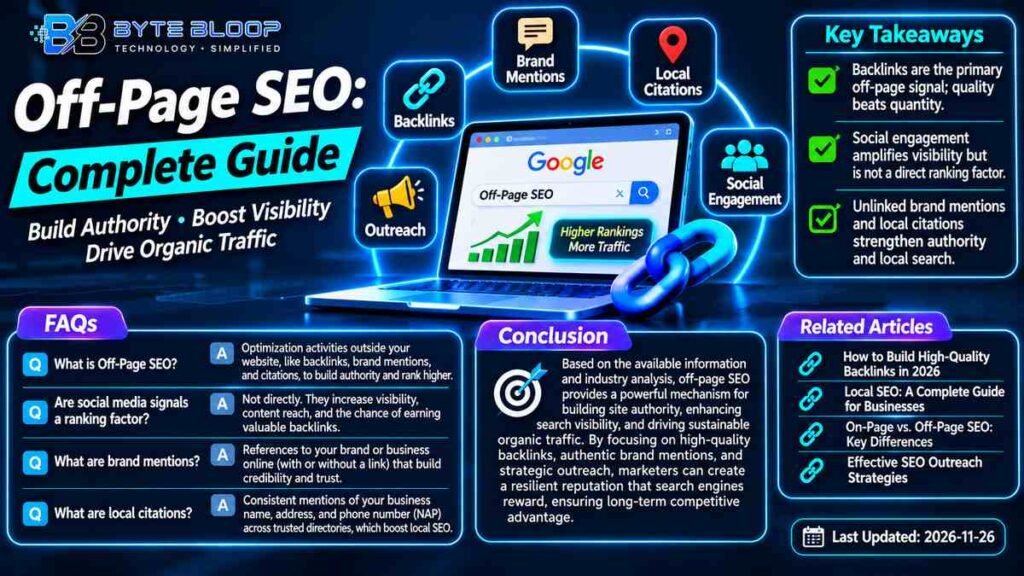
1. Backlinks
Backlinks remain the cornerstone of off‑page SEO. Quality matters far more than quantity. Links from sites with high domain authority, topical relevance, and a natural linking pattern carry the most weight. In 2026, Google’s algorithm continues to penalize manipulative link schemes, so focus on earned links—those acquired through valuable content, outreach, and relationship building. Understanding off-page seo explained helps readers make better, more informed decisions.
2. Social Signals
While not a direct ranking factor, social engagement signals content quality and relevance. Shares, likes, and comments can amplify visibility, drive traffic, and indirectly influence link acquisition. Platforms like Twitter, LinkedIn, and niche forums are fertile ground for generating buzz around new content. Understanding off-page seo explained helps readers make better, more informed decisions.
3. Brand Mentions
Unlinked brand mentions—mentions of your brand name without a hyperlink—are increasingly recognized by search engines as a trust signal. Tools like Mention or Brand24 help track these mentions across the web, enabling you to respond quickly and convert them into links. Understanding off-page seo explained helps readers make better, more informed decisions.
4. Local Citations
For businesses with a physical presence, consistent listings on directories, review sites, and local platforms strengthen local search performance. Accurate NAP (Name, Address, Phone) data across Google My Business, Yelp, and industry‑specific directories is essential. Understanding off-page seo explained helps readers make better, more informed decisions.
5. Content Promotion & Outreach
Creating shareable, high‑value content—infographics, research reports, or interactive tools—sets the stage for natural link acquisition. Outreach campaigns targeting industry influencers, journalists, and bloggers can turn these assets into earned links and social amplification. Understanding off-page seo explained helps readers make better, more informed decisions.
Proven Techniques for 2026
- Guest Blogging on Authoritative Sites – Write niche‑specific posts for high‑DA blogs, ensuring the backlink is contextual and embedded within valuable content.
- Broken Link Building – Identify broken links on reputable sites and offer your relevant content as a replacement.
- Skyscraper Technique – Create an in‑depth resource that surpasses existing top content, then pitch it to sites that linked to the original.
- HARO & Pitching – Respond to journalist queries on Help a Reporter Out (HARO) to secure earned media coverage.
- Influencer Partnerships – Collaborate with micro‑influencers who align with your niche for authentic endorsements and backlinks.
- Social Media Amplification – Use scheduled posts, hashtags, and community engagement to maximize reach.
- Content Syndication – Republish high‑quality content on platforms like Medium or LinkedIn with canonical tags to preserve SEO equity.
- Video SEO – Host videos on YouTube with keyword‑rich titles and descriptions, linking back to the source page.
- Podcast Guesting – Appear on podcasts relevant to your industry, ensuring the episode page includes a backlink.
- Local Partnerships – Engage with local events, charities, or schools to earn local citations and community backlinks.
Measuring Off‑Page Success
Key metrics include:
- Domain Authority and Page Authority (Moz)
- Number and quality of referring domains
- Organic traffic growth from external sources
- Social engagement metrics (shares, likes)
- Brand mention volume and sentiment
- Local search rankings for target keywords
Use tools like Ahrefs, SEMrush, and Google Search Console to track these indicators. Regular audits help identify toxic links, monitor brand health, and spot new link opportunities.
Common Pitfalls to Avoid
Over‑optimizing anchor text, buying links, or engaging in link farms can trigger penalties. Maintain a natural link profile, diversify sources, and prioritize relevance. Also, ignore the importance of content quality—great content fuels all off‑page efforts.
Key Takeaways
- Backlinks are the primary off‑page signal; quality beats quantity.
- Social engagement amplifies visibility but is not a direct ranking factor.
- Unlinked brand mentions and local citations strengthen authority and local search.”]
- faqs
- :
- [object Object],[object Object],[object Object],[object Object]
- conclusion
- :
- Based on the available information and industry analysis
- off‑page SEO provides a powerful mechanism for building site authority
- enhancing search visibility
- and driving sustainable organic traffic. By focusing on high‑quality backlinks
- authentic brand mentions
- and strategic outreach
- marketers can create a resilient reputation that search engines reward
- ensuring long‑term competitive advantage.
- related_article_suggestions
- :
- [object Object]
- last_updated
- :
- 2026-11-26
Conclusion
Based on the available information, this topic provides essential insights for readers looking to understand the core concepts and practical applications.
Related Articles