Open Educational Resources: Explained
Introduction
This guide covers open educational resources explained in detail. Understanding open educational resources explained helps readers make better, more informed decisions.
Open Educational Resources, or OER, have reshaped the global learning landscape by offering free, adaptable materials that anyone can use, modify, and share. These resources span textbooks, videos, quizzes, and even full curricula, and they exist in a variety of formats—from PDFs to interactive web modules. The core idea is simple: remove price barriers and licensing restrictions so educators and learners can collaborate on knowledge creation and dissemination. OER’s rise is driven by policy support from UNESCO, the proliferation of open‑source platforms, and a growing recognition
that education should be a public good rather than a commercial product. For teachers, OER means access to up‑to‑date content that can be tailored to local contexts. For students, it offers a wealth of study materials without the burden of textbook fees. And for institutions, it presents a cost‑effective way to enhance curricula and improve student outcomes. In short, OER democratizes education by putting high‑quality resources into everyone’s hands, regardless of geography or income. Understanding open educational resources explained helps readers make better, more informed decisions.
What Exactly Are OER? — open educational resources explained
According to UNESCO and academic definitions, OER are learning, teaching, and research materials that are either in the public domain or released under licenses that allow free use, adaptation, and redistribution. This includes lecture slides, problem sets, simulations, and even entire courses. The key is that the material is openly licensed—most commonly under Creative Commons (CC) licenses that specify how the content can be shared and modified. Understanding open educational resources explained helps readers make better, more informed decisions.
How OER Works in Practice
Educators typically find OER on dedicated repositories such as OER Commons, MERLOT, or institutional libraries. Once a resource is chosen, teachers can download, edit, and integrate it into their lesson plans. Students can access the same materials for self‑study or collaborative projects. Many OER are hosted on cloud platforms, making them easily searchable and shareable across devices. Understanding open educational resources explained helps readers make better, more informed decisions.
Benefits of Using OER
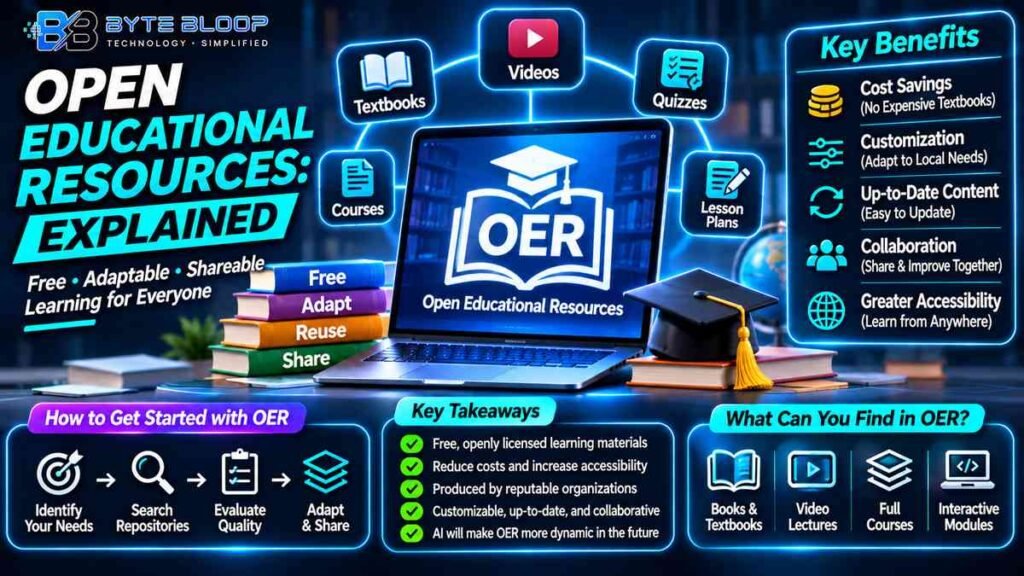
1. Cost Savings: Eliminates textbook expenses, lowering the financial barrier for students and schools. Understanding open educational resources explained helps readers make better, more informed decisions.
2. Customization: Materials can be adapted to match local curricula, languages, or student needs. Understanding open educational resources explained helps readers make better, more informed decisions.
3. Up‑to‑Date Content: Digital formats allow rapid updates, ensuring learners access the latest information. Understanding open educational resources explained helps readers make better, more informed decisions.
4. Collaboration: Open licenses encourage educators to share improvements, creating a community of practice.
Common Misconceptions
Many educators worry that OER lack quality or peer review. In reality, many OER are produced by universities, government agencies, and reputable NGOs, and they undergo rigorous editorial processes. Another myth is that OER are “free” but “unreliable.” The truth is that open licensing does not compromise intellectual property; it simply shifts the cost model from ownership to community stewardship.
Getting Started with OER
1. Identify Your Needs: Pinpoint subject areas or topics where textbooks are expensive or outdated.
2. Search Repositories: Use filters for subject, level, and license type to find relevant resources.
3. Evaluate Quality: Check author credentials, citation counts, and peer reviews.
4. Adapt and Share: Modify content to fit your classroom, then share your version back to the community.
Future of OER
With the rise of AI‑generated content and adaptive learning platforms, OER is poised to become even more dynamic. Emerging tools can automatically update course materials based on new research, while AI tutors can personalize learning pathways using OER content. This synergy promises a future where learning resources evolve in real time, keeping pace with the fast‑moving knowledge economy.
Key Takeaways
- OER are free, openly licensed learning materials that can be adapted and redistributed.
- They reduce costs for institutions and students while increasing content accessibility.
- Quality OER are produced by reputable organizations and undergo peer review.
- OER supports customization, up‑to‑date content, and collaborative improvement.
- Emerging AI tools will further enhance OER’s adaptability and relevance.
Frequently Asked Questions
What is an Open Educational Resource?
An OER is a learning, teaching, or research material that is freely available, openly licensed, and can be used, modified, and shared by anyone.
What are the key features of OER?
Open licensing (often Creative Commons), free access, adaptability, and community-driven improvement are the core features that distinguish OER from traditional resources.
What are the best use cases for OER?
OER is ideal for replacing costly textbooks, supplementing classroom instruction, supporting self‑study, and enabling collaborative curriculum design across institutions.
What are the pros and cons of OER?
Pros include cost savings, flexibility, and increased accessibility; cons may involve variable quality, limited peer review in some cases, and the need for educators to invest time in adapting materials.
Conclusion
Based on the available information and industry analysis, Open Educational Resources provide a scalable, cost‑effective, and collaborative framework that empowers educators and learners worldwide. By embracing OER, institutions can reduce dependency on expensive textbooks, customize content to local needs, and foster a culture of shared knowledge. As technology advances, OER’s role in democratizing education is set to grow, ensuring that high‑quality learning materials remain accessible to all, regardless of geography or economic status.
Related Reading
- The Role of AI in Modern Open Educational Resources
Related Articles